 OwnKeep

Capture what you can verify now
Record a recognizable name, location, manufacturer, model, and serial where available. Take a whole-item photo and relevant detail or label photos. Note the condition you can observe without making a professional assessment. These details make the item easier to identify even before purchase research is complete.
For a fictional secondhand desk, describe its material, size, distinctive details, and current location. If you do not know the original purchase date or price, leave those fields unknown. A useful description is preferable to a precise-looking entry assembled from guesses.
Look for legitimate alternative records
Check the seller's account tools, email confirmations, delivery records, or an authorized duplicate invoice. Ask the seller through its official contact route if a copy is available. Keep each source identified so a later reader can understand whether it is a retailer receipt, payment record, or your own note.
A payment statement may show a transaction with a seller without establishing which item was bought. Use it carefully and protect unrelated financial information. Do not treat a matching amount as conclusive proof of a specific product unless the evidence actually supports that connection.
Label memories and estimates
If you remember an approximate purchase year, say that it is approximate and explain the basis. If you estimate a value for personal planning, keep it separate from historical purchase price and date the estimate. Avoid using the current retail price as a substitute for an unknown amount paid years ago.
An illustrative note might say “received as a gift around 2021; purchase price unknown.” That is honest and useful. If a later document confirms the date, update the record with its source. Do not silently remove uncertainty without obtaining better evidence.
Use photographs thoughtfully
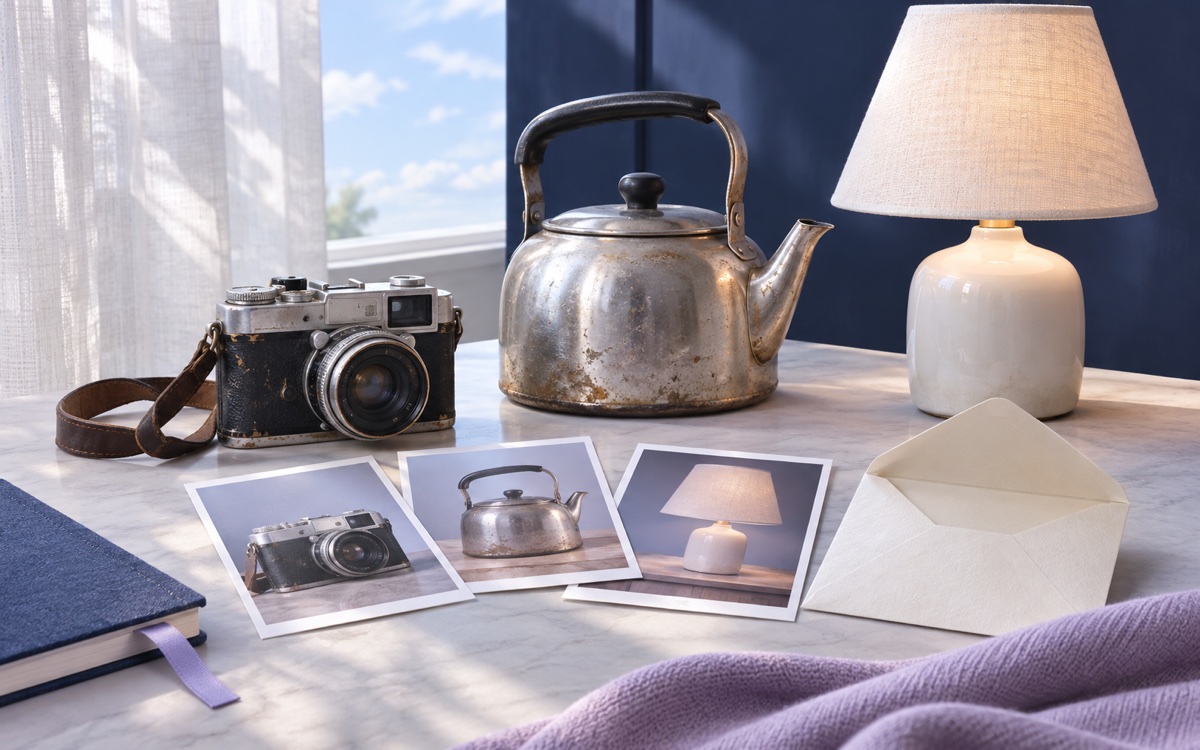
Capture details that distinguish the item and make it easier to describe. The California Department of Insurance notes that photographs can be particularly useful when an item is hard to describe or a receipt cannot be obtained. That does not mean a photograph automatically satisfies every evidence requirement.
Keep private room context and identifying information protected. If sharing with an insurer or provider, ask what it needs and prepare the appropriate copies. A photo of an object, a document showing a purchase, and an appraisal have different roles; do not present one as though it were another.
Maintain a specific follow-up list
Write actionable tasks such as “request invoice from retailer” or “ask giver for gift receipt.” Do not let every record remain vaguely incomplete forever. Review the list during a short scheduled session and close tasks when a source is found or you have documented that it is unavailable.
If a seller cannot provide a duplicate, preserve that response if relevant. Avoid repeatedly searching without a new lead. You can keep the record useful by improving the description, identifiers, and current condition while honestly acknowledging that the historical purchase proof remains missing.
Keep the inventory accurate in OwnKeep
OwnKeep lets you store photos, notes, identifiers, and available documents alongside each item. Free supports a first set of fifteen local records and basic exports. Use notes to explain uncertainty rather than entering fabricated receipt details just to complete a form.
Before relying on the inventory for a claim, return, or warranty request, ask the responsible organization about acceptable evidence. The app does not create proof of purchase or guarantee that alternative records will be accepted. The practical objective is an organized account of what you know, how you know it, and what you still cannot establish.
Sources & disclosure
Published by OwnKeep, which promotes its own app. Prepared with AI assistance; editorial cover imagery is AI-generated. Product screenshots elsewhere on this site use illustrative sample data. Our editorial approach.
Published 2026-11-22. Last substantively updated 2026-11-22.