 OwnKeep


Separate ownership from location
An apartment may contain your furniture, a roommate's electronics, landlord-provided appliances, and borrowed tools. Record who owns an item when it could be ambiguous. A photograph of a room does not establish that everything in the photograph belongs to you.
Use room names that make sense in a multipurpose space. “Desk corner” and “hall storage” can be clearer than forcing everything into a bedroom or living-room label. For shared purchases, note the arrangement as you understand it without treating an inventory note as a legal ownership agreement.
Start with a practical shortlist
Choose items whose identity and evidence would be inconvenient to reconstruct: a laptop, bicycle, camera, musical instrument, monitor, appliance you purchased, or important furniture. Start with ten or fifteen entries rather than trying to list every utensil on your first evening.
For each, record a useful name, location, photo, and available purchase evidence. Add model, serial, and warranty information where relevant. A small first set allows you to test the system before multiplying the work. If a record feels too complicated to update, simplify your required fields now.
Use groups deliberately
A group record can describe a set of similar ordinary belongings, such as a set of dishes. State the count and what is included. Avoid broad entries such as “all clothes” if you will later need more detail about particular items. Separately important or distinctive possessions deserve their own records.
For a fictional starter kitchen, you might record a coffee machine individually and a basic twelve-piece place setting as a group. That is an organizational example, not insurance valuation advice. If your insurer needs a different level of detail, adapt your inventory to its requirements rather than assuming a group photo is sufficient.
Capture without rearranging the apartment
Use one clear surface and move small items through it in batches. Take a whole-object photo, relevant label photo, and receipt capture before returning each item. You can finish a shelf at a time without leaving the entire apartment in disarray.
For large or fixed objects, photograph them where they are. Keep walkways clear and leave inaccessible labels for another safe opportunity. Avoid including a full apartment layout, visible entry codes, or mail in images that may later be shared. A useful inventory does not require publishing a tour of your home.
Plan for the next move
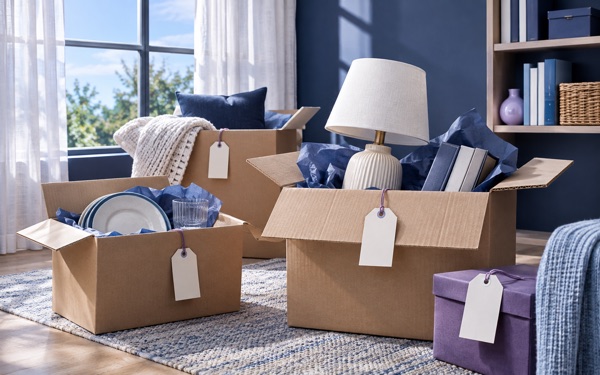
Small apartments often involve changing storage arrangements. Give boxes or bins understandable names and update the item location when you move it. Keep sale and donation decisions separate from the active inventory so items you no longer own do not remain in your current totals.
Before a move, export a dated snapshot and take condition photos of items you are concerned about. Record which pieces belong to the landlord or roommates. Keep any moving-company paperwork separately linked; your personal inventory is a reference, not a replacement for the mover's contract or required condition documentation.
Keep the system lighter than the clutter
Attach a receipt when a new item arrives and review the shortlist after major purchases or a move. You do not need a daily administrative routine. A short monthly check for new, sold, borrowed, or relocated items can keep a small collection understandable.
OwnKeep Free provides fifteen local records, which can cover a focused starting set. Photos, notes, documents, exports, and local backups support the basic workflow without a subscription. If your collection grows, Pro removes the record limit. The free website checklist can help you decide which part of the apartment to capture first.
Sources & disclosure
Published by OwnKeep, which promotes its own app. Prepared with AI assistance; editorial cover imagery is AI-generated. Product screenshots elsewhere on this site use illustrative sample data. Our editorial approach.
Published 2026-11-22. Last substantively updated 2026-11-22.